The Bidet Questions Nobody Asks Out Loud (Answered Honestly)
Does it splash everywhere? What about number one? Do you still use toilet paper at all? We answer the questions people Google at midnight but won't ask their friends.
Most bidet guides tell you about water pressure settings and nozzle positions. What they skip is the stuff people actually want to know but feel too awkward to ask. We're going to fix that.
These are real questions - the kind that show up in our inbox, in Reddit threads at 11pm, and in the search terms that bring people to this site. Answered without hedging, without embarrassment, and without pretending the questions aren't completely reasonable.
No, not if you're positioned correctly. The nozzle is angled and recessed - it only extends when activated. The water stream is aimed precisely, not a general spray. When people describe splashing, it's almost always because they've activated it before sitting down, or they're using a poorly made cheap model with bad angle control. A quality bidet from a reputable brand - the TUSHY Classic 3.0, for example - directs water exactly where it needs to go and nowhere else.
A little, yes - unless your bidet has a warm air dryer, in which case you can skip it entirely. Most people use one or two sheets to pat dry after the water wash. That's it. The point isn't to eliminate paper completely (though you get close with a dryer) - it's to do the actual cleaning with water, then just dry off. Think of it the way you'd think about a shower: water does the work, a towel finishes the job.
Most people don't use it for urination, but there's no reason you can't. Many bidet seats have a "front wash" or "feminine wash" setting specifically for this. Women often find it more comfortable than paper after urinating, particularly anyone with sensitive skin or UTI history. The TUSHY Ace and most electric seats have this feature. Basic cold-water attachments usually only have rear wash.
This is the most common skeptic question and it's a fair one. The answer is that water is objectively better at cleaning than dry paper - not just more comfortable, but more hygienic. Think about it this way: if you got mud on your hand, would you wipe it with a dry paper towel or wash it with water? Water removes. Paper mostly smears. Multiple clinical studies have confirmed that bidet use reduces fecal bacteria compared to toilet paper use alone. You're not just moving things around. You're removing them.
This is the #1 complaint from cold-water attachment users in winter, and it's completely valid. The solution is an electric bidet seat with a water heater. The TUSHY Ace heats the water and the seat. It's a different product category from a $34 attachment, but if you live somewhere cold, the heated water goes from "interesting feature" to "non-negotiable" pretty fast. Most electric seats let you set your preferred temperature and it stays there.
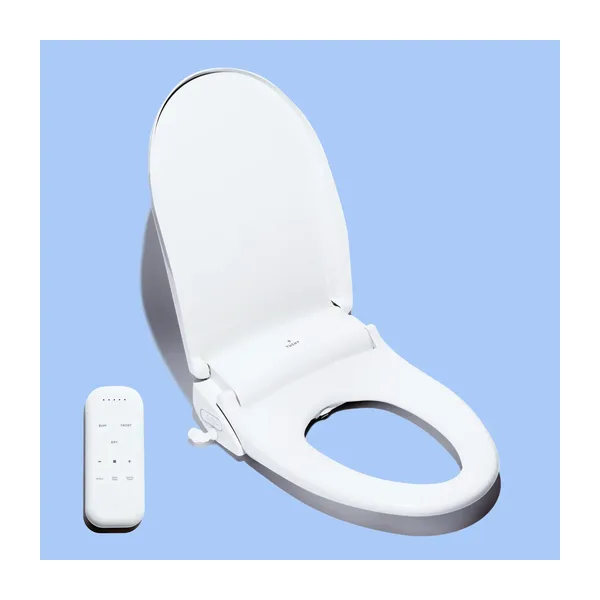
TUSHY Ace
Heated seat, warm water wash, warm air dryer. If cold water is your hesitation, this removes it entirely. The most popular upgrade from a basic cold-water attachment.
On quality models, the nozzle only activates when the seat sensor detects someone sitting on it. You can't accidentally spray the ceiling or your pants by pressing the button before sitting. Budget models sometimes skip this sensor to cut costs - which is one of the reasons we don't recommend the cheapest options. Worth checking the specs: look for "seat sensor" or "lid sensor" in the product features. The Brondell Swash 1400 has a seat sensor. Most quality electric seats do.
Less weird than you'd think. The water running sound is about as discreet as flushing the toilet. Most bidets make minimal noise - a soft water flow that's quieter than the flush. Higher-end models have a deodorizer built in and some play ambient sounds. If privacy is a concern, a dryer is the one thing to think about: warm air dryers are audible (similar to a quiet hair dryer). If that's a problem, just skip the dryer and use a sheet of paper to dry instead.
No. A bidet attachment connects to the same water supply line that fills your toilet tank. You're not adding a new water connection - you're splitting an existing one with a simple T-valve that takes 10 minutes to install and requires no tools beyond a wrench. The water pressure a bidet uses is minimal compared to what your pipes are already handling. In 20 years of bidet adoption in North America, there's no documented plumbing damage from a properly installed bidet. The caveat is "properly installed" - follow the instructions or watch a YouTube video, and you'll be fine.
Not usually, no. Electric bidet seats plug into a standard GFCI outlet, the same kind you'd find near a sink. Most bathrooms built or renovated in the last 30 years have an outlet near the toilet. If yours doesn't, a licensed electrician can add one for $150-$300 - still cheaper than a year of premium toilet paper. If you genuinely have no nearby outlet and don't want to add one, go with a cold-water attachment like the TUSHY Classic 3.0 - no electricity required, installs in minutes.
This happens constantly and it's usually fine. Most guests either figure it out, choose to ignore it, or come back with questions you'll enjoy answering. The one thing worth doing is leaving a small card or note if you want to be considerate - something like "bidet controls on the right, seat sensor activates when seated." Two sentences. Your guests will appreciate the heads-up. A few of them will want one before they leave your house.
Three days, roughly. The first use is weird. The second is less weird. By day four most people have stopped thinking about it. The adjustment is mostly psychological - the physical sensation is fine, the brain just needs a few repetitions to recategorize "water" from "unexpected" to "normal." The longer adjustment is getting your pressure and angle settings dialed in, which takes about a week of small tweaks. After that, you'll set it and forget it.
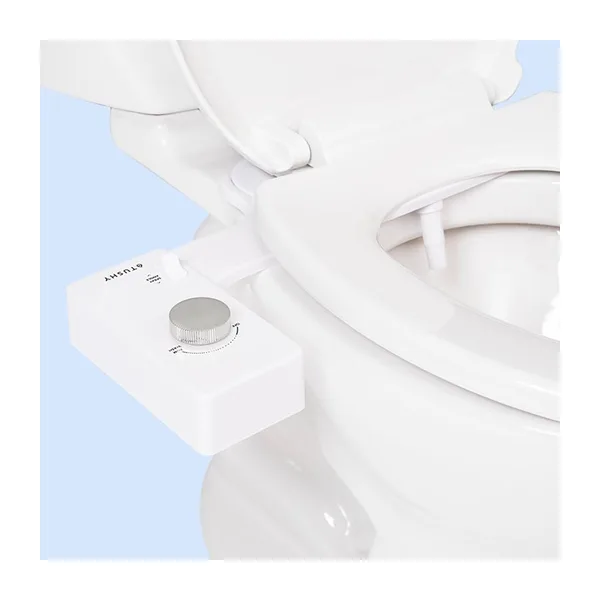
TUSHY Classic 3.0
No electricity, no plumber, no commitment. Attaches under your existing toilet seat in 10 minutes. The answer to "should I try a bidet?" is almost always this.
If you have a question that isn't on this list, there's a good chance it has a similarly straightforward answer. Bidets have been standard in most of the world for decades. The mystery around them in North America is mostly cultural unfamiliarity, not anything complicated about the product itself. Give one two weeks and you'll be the one explaining it to everyone you know.