How Much Water Does a Bidet Use? (And Is It Actually Eco-Friendly?)
The most common pushback we hear about bidets: "Aren't they wasteful? Don't they use a lot of water?" It's a fair question. Here's the actual data - and why it completely flips the argument.
⚡ Quick Answer
A bidet uses approximately ⅛ of a gallon (0.125 gallons) of water per wash - roughly 30 seconds of low-flow spray. A single roll of toilet paper requires 37 gallons of water to manufacture. Switching to a bidet is one of the most water-efficient bathroom decisions you can make.
In This Guide
1. Exactly How Much Water Does a Bidet Use?
Most bidet attachments and seats use between 0.1 and 0.2 gallons of water per wash - roughly ⅛ of a gallon on average. A 30-second wash at a typical bidet flow rate of 0.25 gallons per minute uses about 0.125 gallons.
To put that in perspective: a standard toilet flush uses 1.6 gallons. A single shower uses 20–50 gallons. A bidet wash is, by any measure, a minor water event.
Even if you use a bidet twice a day, that's less than a third of a gallon of water - comparable to brushing your teeth with the tap running for 15 seconds.
2. How Much Water Does Toilet Paper Actually Waste?
This is where the conversation completely changes. Toilet paper doesn't feel wasteful because you don't see the water that went into making it - but the manufacturing footprint is enormous.
According to the Water Footprint Network, manufacturing a single roll of toilet paper requires approximately 37 gallons of water. That's water used in pulp processing, paper manufacturing, bleaching, and finishing. The average American uses about 100 rolls of toilet paper per year - that's 3,700 gallons of water annually, just for toilet paper.
Additionally, the toilet paper industry is one of the largest contributors to global deforestation. About 27,000 trees are cut down every day just for toilet paper production worldwide. The pulping process is also energy-intensive and generates significant wastewater that requires treatment.
The hidden cost of toilet paper: Every time you reach for a roll, you're consuming ~37 gallons of manufacturing water you'll never see. That's 296x more water than a single bidet wash. The water in your bidet spray is a rounding error by comparison.
3. The Real Comparison: Bidet vs. Toilet Paper Water Use
Let's do the actual math for one year of average use:
| Method | Direct Water Use/Year | Manufacturing Water/Year | Total Water Impact |
|---|---|---|---|
| Toilet paper only | ~0 | ~3,700 gallons | ~3,700 gallons |
| Bidet + minimal TP (drying only) | ~91 gallons (2x/day) | ~740 gallons (20 rolls TP) | ~831 gallons |
| Bidet with air dryer (no TP) | ~91 gallons (2x/day) | 0 | ~91 gallons |
A bidet user who still uses a small amount of toilet paper for drying reduces their annual water footprint from ~3,700 gallons to ~831 gallons - a 78% reduction. A bidet with an air dryer brings it down to ~91 gallons - a 97.5% reduction.
The question isn't whether bidets use water. They do. The question is whether 91–831 gallons is more or less than 3,700 gallons. The math is not close.
4. Water Use by Bidet Type
Not all bidets spray the same amount. Here's what to expect across the main categories:
💧 Non-Electric Attachments
e.g. TUSHY Classic, Luxe Neo 120
Flow rate: ~0.2–0.4 GPM. A 30-second wash uses 0.1–0.2 gallons. Cold water only - no tank to fill, no heating element. Lowest water use of any category.
♨️ Non-Electric Warm Water
e.g. TUSHY Spa 3.0
Flow rate: ~0.2–0.4 GPM. Uses the same water volume as cold attachments - just draws from your hot water line. No additional water waste vs. cold models.
⚡ Electric Seat (Tank)
e.g. SmartBidet SB-1000
Flow rate: ~0.2–0.3 GPM. Small internal tank keeps water warm. Tank refills with ~0.5–1 gallon after use. Slightly higher water use than non-electric due to tank cycling.
🌟 Electric Seat (Tankless)
e.g. Brondell Swash 1400, TOTO Washlet C5
Flow rate: ~0.2–0.3 GPM. Heats on demand - no tank to refill. Water use is essentially the same as during the wash itself. Most efficient for warm water delivery.
5. The Full Environmental Picture
Water is just one part of the story. Here's the complete environmental comparison:
Deforestation
The US alone uses about 34 million rolls of toilet paper per day, requiring 15 million trees annually. A bidet user reduces their TP consumption by 70–80%, cutting their contribution to deforestation significantly.
Energy Use
Non-electric bidets use zero electricity. Electric bidet seats use roughly 20–40 watts during a wash cycle - comparable to a phone charger - and many have eco modes that reduce standby power to under 1 watt.
Manufacturing & Packaging
A bidet is manufactured once and lasts 5–10+ years. Toilet paper requires continuous manufacturing, packaging, and shipping - 52 purchases per year, per person. The lifecycle carbon footprint of toilet paper far exceeds that of a bidet over a 5-year period.
Wastewater
Bidet water goes straight into your existing plumbing - no additional treatment load beyond what toilet flushes already create. Toilet paper creates physical solid waste in sewage systems and contributes to fatbergs when not properly processed.
6. Most Eco-Friendly Bidets to Buy
If environmental impact is your priority, here's where to start - from the lowest footprint to the most feature-complete.
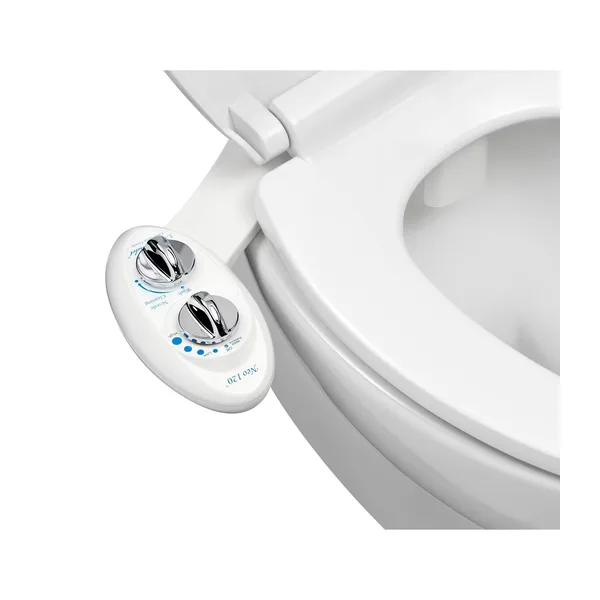
Luxe Bidet Neo 120
Non-electric, zero energy use, lowest cost - best pure-eco choice
No electricity, no heating element, no tank - just cold water from your supply line. The Luxe Bidet Neo 120 has the smallest possible environmental footprint of any bidet: zero energy use during operation, and it reduces your TP use by ~75%. The most eco-friendly option at any price.
- ✓ Zero electricity - runs on water pressure alone
- ✓ Reduces TP use by ~75%
- ✓ Dual nozzle, adjustable pressure
- ✓ Lasts 5+ years with no maintenance
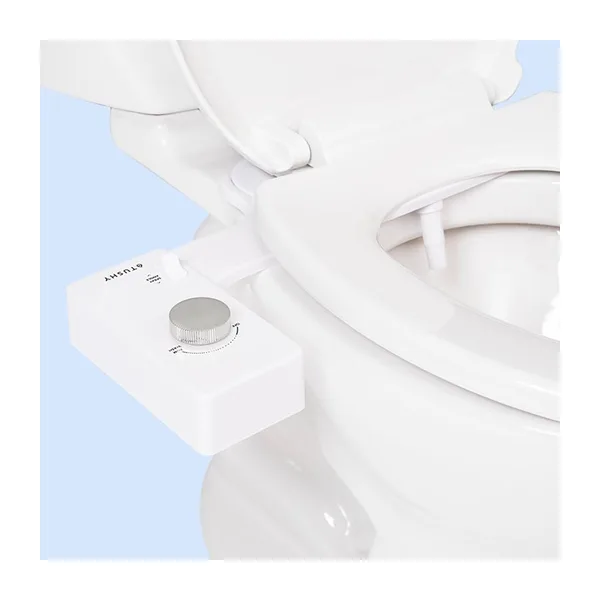
TUSHY Classic 3.0
Best-in-class quality, non-electric, the most popular eco switch
The TUSHY Classic 3.0 is non-electric with a premium build that lasts years. More precise pressure control than budget options, better spray nozzle, and a design that actually looks good in your bathroom. For most people making an eco-motivated switch, this is the best pick.
- ✓ Non-electric - zero energy footprint
- ✓ Premium build quality, lasts years
- ✓ Reduces TP use by 75–80%
- ✓ 4.8 stars · 28,000+ reviews
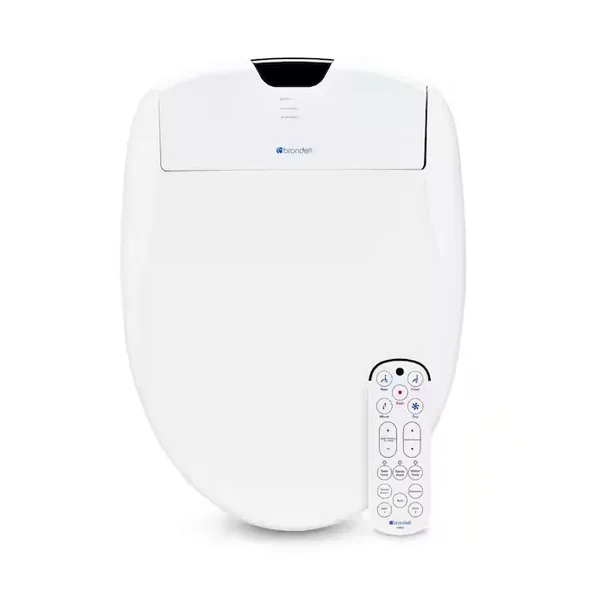
Brondell Swash 1400
Warm water + air dryer = 100% toilet paper elimination
The Brondell Swash 1400 includes a warm air dryer, which means you can go completely paper-free. No TP needed at all - not even a square for drying. If your goal is maximum environmental impact reduction, this is the endpoint: zero toilet paper, zero wipes, forever.
- ✓ Warm air dryer eliminates toilet paper entirely
- ✓ Eco mode reduces standby power to near zero
- ✓ 3-year warranty - long product lifespan
- ✓ Saves ~100 rolls of TP per year, per person
Frequently Asked Questions
Do bidets use more water than toilet paper?
No - not even close. A bidet uses roughly 0.125 gallons per wash. A single roll of toilet paper requires 37 gallons to manufacture. Even using a bidet 3 times a day uses less water than what went into making one roll of TP.
Are non-electric bidets more eco-friendly than electric ones?
Yes, slightly. Non-electric bidets use zero electricity, which gives them a marginally smaller footprint. However, the difference is small - an electric bidet seat uses roughly as much power during a wash as a phone charger. Both are dramatically more eco-friendly than toilet paper.
Will a bidet increase my water bill?
Negligibly. At 0.125 gallons per wash, twice a day, you're adding about 91 gallons per year - less than $1 at average US water rates. Many households actually see their water bills stay flat or drop because reduced toilet paper means fewer flushes needed to clear the bowl.
How much toilet paper does a bidet actually save?
Most bidet users report using 70–80% less toilet paper. If you currently use 100 rolls per year (~US average), you'd drop to 20–30 rolls. With an electric seat and air dryer, you can reach near-zero toilet paper use.
Is a bidet actually good for the environment?
Yes - meaningfully so. The combination of reduced toilet paper production (water, trees, energy, chemicals), reduced packaging waste, and near-zero direct water use makes bidets one of the more impactful low-effort environmental choices available for the average household.
Make the eco-friendly switch today
The Luxe Bidet Neo 120 is the greenest entry point - $34, zero electricity, installs in 10 minutes, and cuts your toilet paper use by 75% from day one.