Why Your Bidet Smells Like Urine (And How to Fix It for Good)
You've scrubbed the bowl. You've wiped every surface. You've tried every cleaning spray. And it still smells. The problem isn't your cleaning routine - it's a spot you almost certainly haven't cleaned yet.
⚡ The Short Answer
Urine is getting trapped under the bidet's mounting brackets - the plastic feet that bolt the unit to your toilet bowl. This area is completely inaccessible during normal cleaning. Over time, urine pools and crystallizes underneath, and no surface spray can reach it. The fix: remove the bidet every 3–6 months, clean underneath, and reassemble. Takes about 15 minutes.
In This Guide
1. Why This Happens - And Why It's Not Your Fault
When you install a bidet attachment, it sits between your toilet bowl and your existing seat. The unit is secured by two mounting brackets - plastic clips that bolt down flat against the porcelain on either side of the bowl. These brackets grip the bowl tightly enough to hold the bidet in place, but not so tightly that there's zero gap.
That gap - just a few millimetres - is the problem.
Every time someone uses the toilet, urine splashback (both from the bowl and from the bidet spray itself) finds its way into that gap. It pools under the brackets in a pocket that's completely sealed off from the outside. You can spray every cleaning product in existence on the visible surfaces of your bidet, and none of it will reach underneath those mounts.
Over weeks and months, that trapped urine doesn't just sit there - it crystallizes. Urine contains uric acid, which forms solid yellow-brown crystite deposits when it dries and concentrates. These crystals continue to off-gas ammonia even after they've solidified, which is why the smell persists no matter how hard you clean the surfaces.
The reality check: This isn't a bidet-specific problem - it happens with standard toilet seats too, just in slightly different spots. The difference is that a bidet attachment creates additional low-clearance contact points against the porcelain that are harder to access. If you've ever removed a toilet seat after years of use, you know what can accumulate underneath.
The good news: once you understand where the smell is coming from, fixing it is completely straightforward. It just requires one step most people never think to take - removing the whole unit.
2. The Fix: How to Clean Under Your Bidet Properly
This takes about 15 minutes and requires no special tools. Here's the complete process:
Gather your supplies
You'll need: white vinegar (or a descaling spray), an old toothbrush or small stiff brush, paper towels or microfibre cloths, and a flathead screwdriver or coin for the mounting bolts.
Shut off the water supply
Turn the shut-off valve behind your toilet clockwise to close it. Flush once to clear water from the supply line. Then disconnect the bidet's T-valve hose from the water inlet - have a towel ready for the small amount of water that will drip out.
Remove the toilet seat and bidet together
Locate the two plastic caps at the back of the toilet seat (usually near the hinge). Pop them off, unscrew the bolts underneath (righty-tighty, lefty-loosey - they're often hand-tightenable), and lift the entire assembly - seat plus bidet - straight up off the bowl.
Assess the damage
Look at the underside of the mounting brackets and the corresponding area on the toilet bowl. You'll likely see yellow-brown mineral deposits and dried residue. This is uric acid crystallisation - completely normal, completely cleanable.
Dissolve the crystals with white vinegar
Soak paper towels in undiluted white vinegar and lay them over the affected areas on both the bidet bracket and the toilet bowl surface. Leave for 10–15 minutes. The acetic acid in vinegar dissolves uric acid crystals far more effectively than any surface spray. For heavy buildup, a dedicated descaling product works even faster.
Scrub and rinse
Use an old toothbrush to scrub all contact surfaces - the underside of the brackets, any recessed channels or grooves, and the toilet bowl contact points. Wipe clean with damp cloths, then dry thoroughly before reassembly.
Reassemble and reconnect
Place the bidet back on the bowl, align the mounting holes, and hand-tighten the bolts - snug but not over-torqued (cracking the porcelain is possible). Reconnect the water hose, turn the supply valve back on, and check for leaks. Done.
✅ After the deep clean
The smell should be completely gone within 24 hours - once you've removed the uric acid source, there's nothing left to off-gas. If any faint odour persists, check the underside of the toilet seat itself (the same buildup can happen along the seat's hinge points) and repeat the vinegar soak there.
3. How to Prevent It Coming Back
Use the bidet before you finish
The bidet spray rinses the bowl area as well as you - this naturally flushes the gap around the mount with clean water. Getting in the habit of a brief rinse each time significantly reduces the accumulation rate.
Weekly: run vinegar around the base
A 30-second weekly routine: squirt a small amount of diluted white vinegar into the gap between the bidet mount and the bowl using a squeeze bottle or pipette. It reaches further than sprays and stops crystals forming before they start.
Don't over-tighten the bolts
Counter-intuitively, a slightly looser fit makes cleaning easier and reduces pooling - there's slightly more airflow in the gap. Tighten until secure, not until immovable. This also prevents hairline cracks in older porcelain.
Schedule a quarterly removal
Put it in your calendar: every 3 months, remove the bidet, clean underneath, reassemble. A 15-minute job every quarter is far easier than the deep-clean required after a year of buildup.
4. How Often Should You Remove and Deep Clean?
It depends on your household. A single person or couple will accumulate far less than a household with multiple users - especially if any of them have less precise aim. Here's a general guide:
| Household | Recommended Frequency | Weekly Maintenance |
|---|---|---|
| 1–2 adults, careful users | Every 6 months | Vinegar rinse around mount |
| Family with children | Every 3 months | Vinegar rinse + wipe down |
| Heavy use / multiple users | Every 6–8 weeks | Vinegar rinse + extended soak |
| After noticing any smell | Immediately | Full removal and deep clean |
5. Bidets With Better Mount Designs
Not all bidets are equal when it comes to mount accessibility. Some are designed with cleaning in mind - wider gaps, removable mounting plates, or quick-release systems that let you slide the unit off without tools. If you're due for an upgrade, here's what to look for:
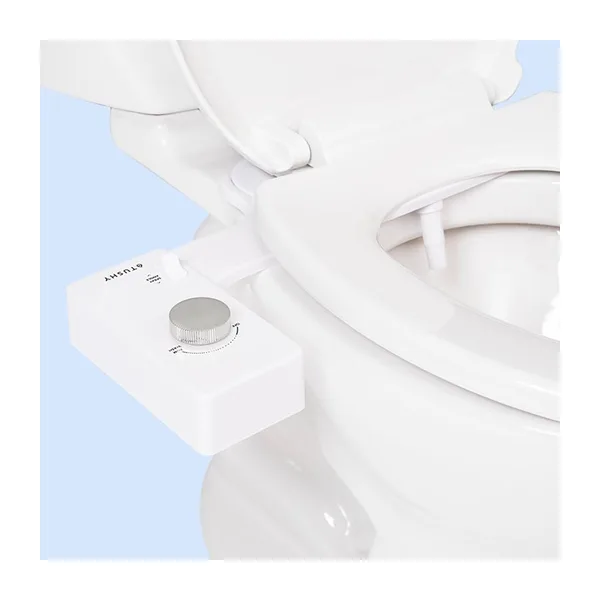
TUSHY Classic 3.0
Quick-release mounting plate - slides off without tools
The TUSHY Classic 3.0 uses a mounting plate system where the bidet body slides on and off the fixed plate. This means for routine cleaning you only need to slide the main unit off - no tools, no disconnecting the water line. The fixed plate stays bolted down and can be cleaned around more easily. For the full quarterly clean, it still needs to come off, but day-to-day maintenance is far simpler than older designs.
- ✓ Slide-off body - no tools for routine cleaning
- ✓ Self-cleaning nozzle - retracts and rinses automatically
- ✓ Smooth surfaces - no hard-to-reach grooves
- ✓ 4.8 stars · 28,000+ reviews
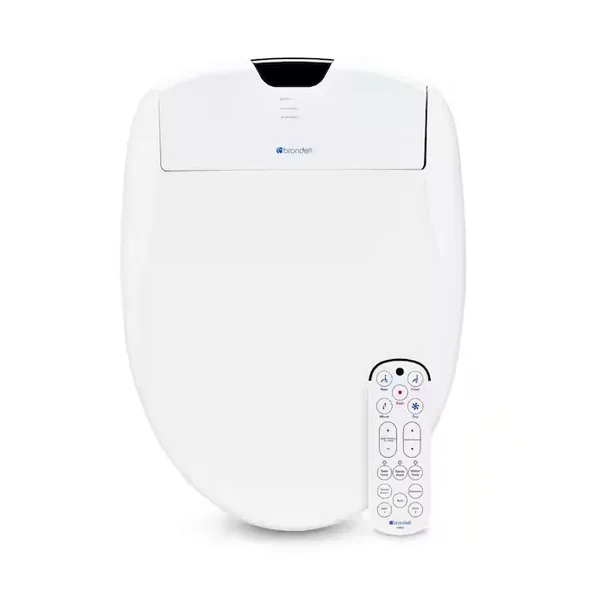
Brondell Swash 1400
Full seat replacement - no gap between bidet and bowl
Electric bidet seats like the Brondell Swash 1400 solve this problem differently - they replace your entire toilet seat rather than clipping underneath one. This eliminates the low-clearance gap that traps urine in attachment-style bidets. The seat sits flush against the bowl with a clean contact interface, and removal for cleaning is as simple as removing a standard toilet seat. If the urine-under-mount issue is a dealbreaker for you, upgrading to a full seat is the permanent solution.
- ✓ Replaces your seat entirely - no attachment gap
- ✓ Warm water + air dryer - no TP needed
- ✓ Easy-release seat hinge for cleaning
- ✓ 3-year warranty + US support
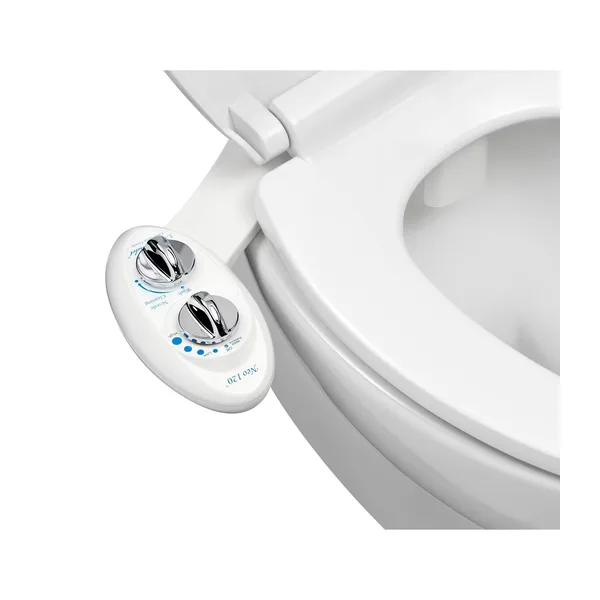
The Luxe Bidet Neo 120's slim profile means there's less overall surface area in contact with the bowl, which reduces - though doesn't eliminate - the accumulation zone. At under $35, it's also the easiest to remove for cleaning: simple bolt system, no quick-release needed. If you're on a budget and happy with cold water, this is a solid choice that's easy to maintain properly.
- ✓ Slim profile - smaller footprint under the seat
- ✓ Simple bolt removal - no tools needed
- ✓ Under $35 - easiest to replace if needed
- ✓ 4.6 stars · 19,000+ reviews
Frequently Asked Questions
Do I have to remove the bidet every week to prevent this?
No. Weekly removal is overkill and annoying. The right approach is: a 30-second vinegar rinse around the mount weekly (with a squeeze bottle - no removal needed), and a full removal and deep clean every 3–6 months depending on household size. That's it.
Will bleach work better than vinegar for the crystals?
Actually, no. Bleach disinfects but doesn't dissolve uric acid crystals - it just kills the bacteria on top. White vinegar (acetic acid) or a dedicated enzyme-based urine remover chemically dissolves the crystals. For heavy buildup, an enzyme cleaner like Zout or Urine Off works even better than vinegar. Never mix bleach and vinegar.
Is this problem worse with some bidets than others?
Yes. Attachment-style bidets that clip under an existing seat are most prone to this because they add extra contact points against the bowl. Full bidet seats (which replace the entire toilet seat) have fewer low-clearance gaps and are generally easier to keep clean. Within attachment-style bidets, models with quick-release bodies are more maintainable than those requiring full bolt removal for routine cleaning.
What if the smell continues after cleaning?
Check these three additional spots: (1) the underside of your toilet seat along the hinge area - same buildup happens there, (2) the base of the bidet's nozzle housing where it meets the body, and (3) the supply hose connection points. If the smell persists after addressing all of these, the issue may be in the toilet itself rather than the bidet.
Can I use a bidet cleaning tablet to prevent this?
Toilet bowl cleaning tablets can help reduce overall bacterial and mineral buildup in the bowl, which may slow accumulation under the mount slightly. But they can't reach under a tightly-fitted bracket. They're a supplement to, not a replacement for, periodic removal and cleaning.
Thinking about upgrading?
If maintenance is a concern, a full bidet seat eliminates the under-mount gap entirely. The Brondell Swash 1400 is our top pick - warm water, air dryer, and far easier to keep clean than any attachment.